
GUIDE
Non-US Freelancer With US Clients? ACH Works. Here's How
You don't need a US bank account to get paid like you have one. How ACH payouts work for contractors outside the US, step by step.
Reviewed by Amar Parab on May 9, 2026
PF is a mandatory retirement savings scheme in India where both employer and employee contribute 12% of basic salary plus dearness allowance each month.
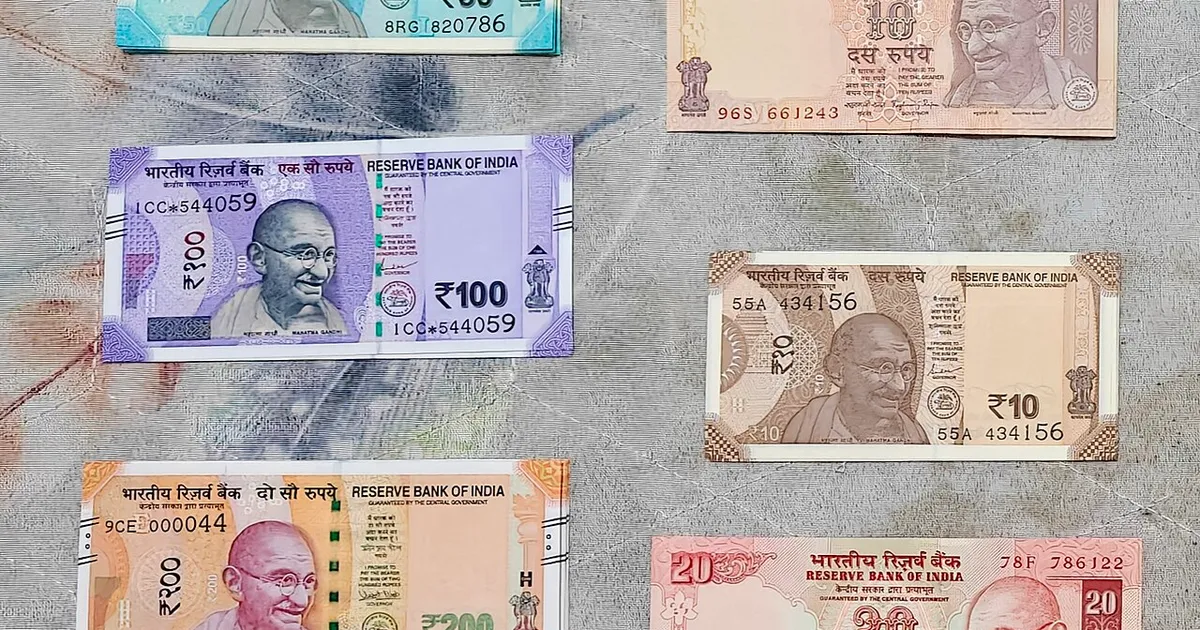
Provident Fund (PF), formally known as the Employees’ Provident Fund (EPF), is India’s primary mandatory retirement savings scheme. Both the employer and the employee contribute 12% of the employee’s basic salary plus dearness allowance (DA) each month. The fund is managed by the Employees’ Provident Fund Organisation (EPFO), a statutory body under the Ministry of Labour and Employment. PF applies to all establishments with 20 or more employees and is one of the most significant statutory deductions in Indian payroll.
The EPF scheme operates under the Employees’ Provident Funds and Miscellaneous Provisions Act, 1952. Here is how the contributions are structured:
Employee Contribution (12%): Deducted from the employee’s monthly salary and deposited entirely into their EPF account. This earns interest, the EPFO-declared rate for FY 2024-25 is 8.25% per annum.
Employer Contribution (12%): This is split across three sub-schemes:
Administrative Charges: The employer also pays 0.50% toward EPFO administrative charges and 0.01% toward EDLI administrative charges, bringing the total employer outflow above 12%.
The statutory wage ceiling for PF is ₹15,000 per month. Employees earning a basic salary above ₹15,000 can opt to contribute on the capped amount (₹1,800/month) or on their actual basic salary. Most employers contribute on actual basic salary for employees earning above the ceiling.
For an employee with a basic salary of ₹33,333 per month (₹4,00,000 annually):
| Component | Rate | Monthly Amount (₹) | Annual Amount (₹) |
|---|---|---|---|
| Employee PF Contribution | 12% of Basic | 4,000 | 48,000 |
| Employer EPF Contribution | 3.67% of Basic | 1,223 | 14,676 |
| Employer EPS Contribution | 8.33% of Basic (capped) | 1,250 | 15,000 |
| Employer EDLI | 0.50% of Basic | 167 | 2,000 |
| Admin Charges (EPFO) | 0.50% of Basic | 167 | 2,000 |
| Admin Charges (EDLI) | 0.01% of Basic | 3 | 40 |
| Total Employee Deduction | 4,000 | 48,000 | |
| Total Employer Cost | 6,810 | 81,716 |
Note that EPS contribution is capped at ₹1,250/month (8.33% of ₹15,000). When basic salary exceeds ₹15,000, the excess employer contribution that would have gone to EPS is redirected to the EPF account instead.
Key compliance dates:
Foreign nationals employed in India, and Indian employees posted abroad, are treated differently from domestic members. Under Paragraph 83 of the EPF Scheme 1952 and Paragraph 43A of the Employees’ Pension Scheme 1995, an “International Worker” is:
The critical difference is that the ₹15,000 monthly wage ceiling does not apply to International Workers. Contributions are due on the full monthly salary, including any portion paid outside India. For a foreign national earning ₹5,00,000 per month, both employee and employer PF contributions are calculated on the full ₹5,00,000, not capped at ₹15,000. This can lead to large monthly outflows, particularly for expatriate senior hires.
India has Social Security Agreements in force with around 20 countries, including Belgium, Germany, Canada, Australia, Japan, France, Netherlands, Switzerland and South Korea. Workers from these SSA countries can obtain a Certificate of Coverage from their home country’s social security authority, avoiding double contribution in India. They can also withdraw their Indian PF on cessation of employment.
Workers from non-SSA countries have no such relief: they must contribute on full wages and can only withdraw their PF balance on attaining age 58, or earlier only in narrow circumstances. The constitutional validity of these rules has been contested, the Karnataka High Court struck them down in April 2024, but the Delhi High Court subsequently upheld them in the SpiceJet matter, so the current position is that the rules continue to apply pending final resolution.
When an employee changes jobs, they have two options for their PF balance:
For most employees moving between covered employers, transfer is the correct choice: it preserves tax-free compounding and continuous service. Withdrawal should typically be reserved for cases of genuine unemployment or migration out of India.
Every EPF member is issued a 12-digit Universal Account Number that is portable across employers. The UAN system, introduced in 2014, is the backbone of the modern EPF: it allows employees to view consolidated balances, initiate transfers online, download passbooks, and track claim status without employer intervention.
For an EOR or employer onboarding a new hire, the correct sequence is:
The EPFO has also rolled out Aadhaar-based OTP authentication, which has significantly reduced employer-attested paperwork for claims.
The employee’s PF contribution is deductible under Section 80C of the Income Tax Act, within the shared ₹1.5 lakh annual cap that also covers PPF, ELSS, life insurance premiums, tuition fees and NSC. Because the 12% employee contribution is automatic and typically the largest single Section 80C entry on a salary, many employees hit the ₹1.5 lakh cap through PF alone.
The employer’s contribution is not Section 80C, it is tax-exempt in the employee’s hands as long as it stays within statutory limits. Since the Finance Act 2020, however, aggregate employer contributions to PF, NPS and superannuation that exceed ₹7.5 lakh per year are taxable in the employee’s hands as a perquisite.
Interest on the employee’s PF contributions is tax-free up to an annual employee contribution of ₹2.5 lakh (₹5 lakh if the employer does not contribute to the account). Interest on contributions above that cap is taxable under the 2021 amendment to Section 10(11) and 10(12). All of these deductions and exemptions apply only to employees on the old tax regime.
Provident Fund compliance is non-negotiable in India. The EPFO actively audits establishments and imposes penalties for non-compliance, including:
For foreign companies, PF creates two specific challenges. First, they need an Indian entity registered with the EPFO to make contributions, you cannot deposit PF from a foreign bank account. Second, structuring salary with the right basic salary percentage directly impacts PF costs. A higher basic salary means higher PF contributions, increasing employer costs but also providing better retirement benefits to employees.
Foreign companies often underestimate PF costs when budgeting for Indian hires. The employer’s true PF cost is not just 12%, it is closer to 13% when you include administrative charges and EDLI contributions. Use the CTC Calculator to model the exact employer PF outflow against any basic salary, and see the PF and ESIC India guide for the full compliance walkthrough.
Omnivoo manages the entire PF lifecycle as your Employer of Record. The platform calculates contributions accurately each payroll cycle, generates ECR files for EPFO submission, deposits contributions before the 15th deadline, and files monthly returns. Employees receive their UAN upon onboarding and can track their PF balance through the EPFO member portal. Omnivoo ensures zero-penalty compliance so foreign companies never need to interact with the EPFO directly.
Basic salary is the core fixed component of an Indian salary structure, typically 40-50% of CTC, that determines PF contributions, gratuity, HRA exemption, and other statutory calculations.
ESI is a mandatory social security and health insurance scheme for Indian employees earning up to ₹21,000 per month, funded by employer and employee contributions.
UAN is a unique 12-digit number assigned to every EPF member that remains the same throughout their career, linking all PF accounts across employers.
Stop worrying about Indian payroll and compliance terms. Omnivoo manages everything (PF, ESI, TDS, professional tax, and more) across all 28 states.
Get startedYour first month is 80% off
We paused, rebuilt our payment stack from the ground up, and came back stronger. Experience the full platform before you commit. New customers only.
Claim your offer →Full details in our Terms of Service →