
GUIDE
India Employee Offboarding Process: Full and Final Settlement Guide 2026
India employee offboarding and Full and Final Settlement in 2026: notice periods, F&F components, PF transfer, Form 16, and litigation risks.
Reviewed by Rohan Sasne on May 25, 2026
Form 16 is an annual TDS certificate issued by an employer to each employee, summarizing salary paid and income tax deducted during the financial year.
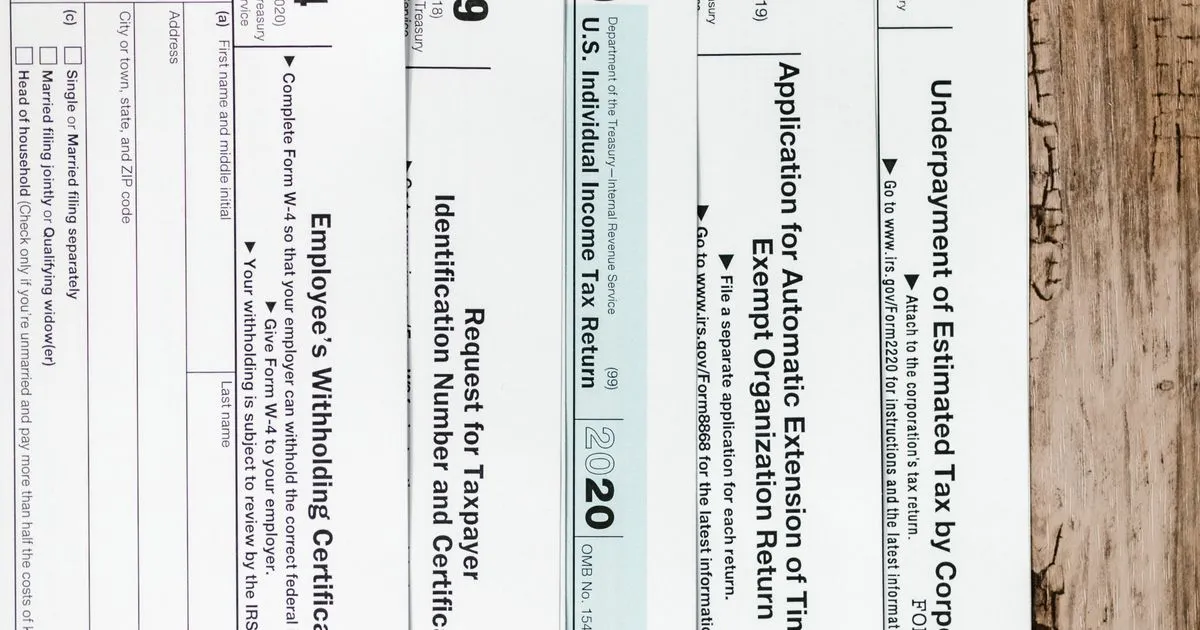
Form 16 is the annual certificate of tax deduction at source (TDS) that every employer in India must issue to employees from whose salary income tax has been deducted. Prescribed under Section 203 of the Income Tax Act and Rule 31, Form 16 serves as proof that the employer deducted TDS correctly and deposited it with the government. It is the single most important document an employee needs to file their personal income tax return. Employers must issue Form 16 by June 15 following the end of each financial year. See the Form 16 India guide for a section-by-section walkthrough.
Form 16 consists of two parts, each serving a distinct purpose:
Part A, Certificate of Tax Deducted and Deposited
Part A is generated and downloaded from the TRACES portal (TDS Reconciliation Analysis and Correction Enabling System). It contains:
Part A is system-generated with a unique certificate number. It can only be downloaded after all four quarterly Form 24Q returns are filed.
Part B, Details of Salary and Tax Computation
Part B is prepared by the employer and contains:
| Section | Contents |
|---|---|
| Gross Salary | Basic, HRA, special allowance, bonus, other components |
| Exemptions under Section 10 | HRA exemption, LTA, and other exempt allowances |
| Net Salary | Gross salary minus exemptions |
| Deductions under Chapter VI-A | Section 80C, 80D, 80E, 80TTA, and others (old regime only) |
| Standard Deduction | ₹50,000 (old regime) or ₹75,000 (new regime, FY 2024-25 onwards) |
| Taxable Income | Net salary minus deductions |
| Tax on Total Income | Computed per the applicable slab rates |
| Rebate under Section 87A | If applicable |
| Surcharge and Cess | 4% Health and Education Cess |
| Tax Payable / Refundable | Net tax after rebate and cess |
| Relief under Section 89 | If salary arrears received |
Example: Form 16 Part B Summary
For an employee with ₹12,00,000 CTC under the new tax regime:
| Line Item | Amount (₹) |
|---|---|
| Gross Salary | 10,50,000 |
| Less: Exemptions u/s 10 | 0 |
| Net Salary | 10,50,000 |
| Less: Standard Deduction | 75,000 |
| Taxable Income | 9,75,000 |
| Tax on Taxable Income | 47,500 |
| Add: Health & Education Cess (4%) | 1,900 |
| Total Tax Deducted (TDS) | 49,400 |
Calculation breakdown under new regime: ₹0 on first ₹3L + 5% on ₹3-7L (₹20,000) + 10% on ₹7-9.75L (₹27,500) = ₹47,500.
Employees frequently conflate the three TDS certificate formats. They are distinct documents issued under different provisions:
| Form | Issued For | Issued By | Frequency | Statutory Provision |
|---|---|---|---|---|
| Form 16 | TDS on salary | Employer | Annual (by 15 June) | Section 203, Rule 31 |
| Form 16A | TDS on non-salary payments (professional fees, rent, commission, interest, dividends) | Deductor (bank, client, tenant) | Quarterly | Section 203, Rule 31 |
| Form 16B | TDS on sale of immovable property above ₹50 lakh | Buyer of the property | Per transaction | Section 194-IA, Rule 31 |
| Form 16C | TDS on rent above ₹50,000/month paid by an individual | Tenant | Per transaction | Section 194-IB, Rule 31 |
A salaried professional who also earns interest on fixed deposits will receive a Form 16 from the employer and a separate Form 16A from the bank. A person who sells a property above ₹50 lakh will receive a Form 16B from the buyer. All three reconcile back to Form 26AS, which aggregates every TDS credit against the PAN.
The two parts of Form 16 answer different questions and are generated differently. Employees and finance teams should understand how to read each.
Part A (TDS summary) is a system-generated, quarter-wise summary downloaded from TRACES after the employer files Form 24Q. Key fields to verify:
Part B (salary breakup and computation) is prepared by the employer, signed by an authorised signatory, and should tie out mathematically. Work through it in order:
| Event | Deadline |
|---|---|
| Q1 Form 24Q (April-June) | July 31 |
| Q2 Form 24Q (July-September) | October 31 |
| Q3 Form 24Q (October-December) | January 31 |
| Q4 Form 24Q (January-March) | May 31 |
| Issue Form 16 to employees | June 15 |
| Employee ITR filing deadline | July 31 |
Penalties for Non-Issuance:
If an employer fails to issue Form 16 by June 15, they face a penalty of ₹100 per day of delay under Section 272A(2)(g), up to the amount of TDS deducted. Beyond penalties, employees without Form 16 cannot easily file their tax returns, which creates friction and can damage the employer’s reputation.
Employees are not helpless if a Form 16 is late or wrong. The standard escalation path is:
Form 26AS is the Income Tax Department’s consolidated tax credit statement, pulled from every TDS return filed against the taxpayer’s PAN. It is the single source of truth for tax credits at assessment. Every amount shown in Part A of Form 16 must match the corresponding entry in Form 26AS. If they diverge, the return will be flagged and the TDS claim may not be processed until the mismatch is resolved.
Common causes of mismatch are: wrong PAN on the TDS return, wrong TAN on the challan, a challan that failed to be uploaded to OLTAS, or a late TDS return that has not yet flowed through to 26AS. The fix is always on the deductor’s side, the employer must file a correction through TRACES. Employees should check 26AS before accepting Form 16 at face value, ideally in early June so any correction can happen before the 31 July ITR deadline.
The Annual Information Statement (AIS), introduced in 2021, extends 26AS by including reporting from banks, mutual funds, property registrars and other financial institutions, and is now the more complete reference. Both 26AS and AIS are available on the income tax portal under the taxpayer’s login.
For foreign companies with Indian employees, Form 16 issuance is a hard legal requirement, not a courtesy. Key considerations:
Omnivoo files quarterly Form 24Q returns on time, generates Part A from TRACES after year-end reconciliation, prepares Part B with accurate salary and tax computation details, and distributes Form 16 to every employee well before the June 15 deadline. Employees can download their Form 16 directly from the Omnivoo employee portal, and the platform maintains historical Form 16s for all previous financial years.
PF is a mandatory retirement savings scheme in India where both employer and employee contribute 12% of basic salary plus dearness allowance each month.
TDS is the income tax an employer withholds from an employee's salary each month and deposits with the government on their behalf.
Stop worrying about Indian payroll and compliance terms. Omnivoo manages everything (PF, ESI, TDS, professional tax, and more) across all 28 states.
Get startedYour first month is 80% off
We paused, rebuilt our payment stack from the ground up, and came back stronger. Experience the full platform before you commit. New customers only.
Claim your offer →Full details in our Terms of Service →